Nada Yoga · Anahata · The Yoga of Sound
Turiyānahata
The observer of the unstruck sound. The witness, established in the fourth state, who hears the silence sounding beneath all sound.
Beyond waking (jāgrat), dream (svapna), and deep sleep (sushupti) is a fourth — Turīya — pure consciousness, the witness present in all three states yet bound by none. Not a state you enter, but the awareness in which all states arise.
Anāhata means “unstruck” — the sound not produced by two things striking. It is the seat of the heart chakra and the name of the eternal sound that sounds without a source: the hum at the core of existence, heard only in deep silence.
Turiyānahata — the one who, resting in the fourth state, witnesses the unstruck sound. Not the singer. Not the song. The silent listener in whom both arise.
Nada Yoga — the yoga of sound — divides all vibration into two. One is made; one is found.
All audible sound — produced when two things strike: bow on string, breath on reed, hand on drum. Every raag, every word, every birdsong. This sound is a bridge: practiced with devotion, the struck sound leads the listener toward the unstruck. The raag is a ladder.
The sound with no source — already sounding, eternally, beneath all hearing. It cannot be made, only uncovered, by following the struck sound inward until it dissolves. To hear it steadily is to arrive at the threshold of the silence that is its source. The unstruck sound is the destination.
Anahata means 'unstruck' — a sound made by nothing striking anything. Every ordinary sound is born of two things meeting: a string and a finger, air and a reed, two palms. The unstruck sound has no two things. It is already sounding before anything is struck — the hum beneath existence. It is heard not with the ears but in the silence behind them.
Anahata chakra — the heart center
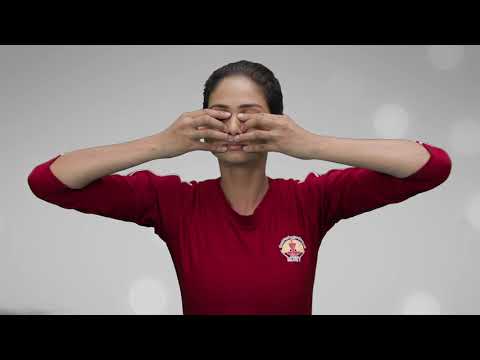
Close the ears with Shanmukhi Mudra and listen into the silence. What remains when no sound is being made — that is the Anahata.
Sound descends through four levels — from the soundless source to the spoken word. To meditate on sound is to climb back up: from the audible, through thought and vibration, to the silence it came from.
Audible, articulated, spoken sound — all ordinary speech and music. This is Ahata Nada, the struck sound. Every raag lives here.
The sound of thought — mental, subtle, unspoken language. The inner voice that narrates before the mouth moves.
Sound as pure vibration, 'seen' by the yogi as light before it differentiates into words. The level where seer and sound are not yet two.
The soundless source — Para Nada. Pure potential, undifferentiated, silent. The womb from which all four levels descend.
The Hatha Yoga Pradipika (Chapter 4) describes the sounds heard as Kundalini ascends — each stage subtler, each sound deeper, until sound itself dissolves into the soundless.
Sweet tinkling sounds — bells, anklets, ornaments (kinkini)
The deep resonance of a kettledrum (bheri)
The roll of a great drum (mardala)
Flute and vina — then soundlessness
Who hears the unstruck sound? Not the ear — the ear hears only struck sounds. Not the mind — the mind is itself a kind of sound (Madhyama). The one who hears the Anahata is the witness, the Sākshī, consciousness resting in Turīya — the fourth state that underlies waking, dream, and deep sleep.
This is the whole arc of the practice: the struck sound (a raag, a chant, the breath) draws the attention inward; the attention follows the sound from gross to subtle; the sound thins into the unstruck Nada; and the one left listening — silent, unmoving, present — is revealed to have been there all along. The seeker discovers they are the witness they were seeking. Turiyānahata.
The humming bee breath. Creates an inner resonance that primes the ear for the subtle sound. The bridge from struck to unstruck.
Close the ears, eyes, and nostrils with the fingers (the 'six gates'). With outer sound sealed off, the inner sound is unveiled.
Plug the ears and listen into the right ear. Traditionally the subtle Nada is first caught here, growing steadier with practice.
Follow the natural mantra of the breath — 'So' in, 'Ham' out — until you are no longer reciting but only overhearing it.
A raag is Āhata Nada — struck sound, the most refined form of it. But its purpose was never entertainment. In the classical understanding, the raag is a vehicle: each swara, held and surrendered to, draws the listener one step inward, toward the Nada that does not need to be struck. This is why the site is called Turiyānahata — every raag here is an invitation to follow the struck sound until it becomes the unstruck.
Nada Yoga — the yoga of sound — is the path from the struck sound (Ahata) to the unstruck (Anahata). These resources go deeper into the inner sound, its stages, and how to listen.